
Does thermal mass floor heat work in large buildings?
The short answer
It works better. A 1,200 sq ft building may need 10 to 12 watts per square foot, while a 100,000 sq ft building typically needs 5 to 8. High walls, lots of glass and dock doors are hard for forced air, but radiant heat only has to warm the bottom 6 feet, where people are.
Bigger mass, lower cost
A small stand-alone slab building with thermal mass floor heat typically needs 10 to 12 watts per square foot, depending on location, use and insulation. A 100,000 sq ft building typically needs 5 to 8. Once a large thermal mass is fully charged, it holds indoor temperatures through long cold stretches far better. Take a large rock and a small rock out of a fire, and the large one stays warm longer.
Hard spaces for forced air
High sidewalls, lots of glass, multiple dock doors and high air-exchange rates all work against forced air, which has to heat the entire volume of the space and push warm air down to the floor. Radiant heat warms people and objects. It only needs the bottom 6 feet to be comfortable, not the 50 feet above.
Fast to install
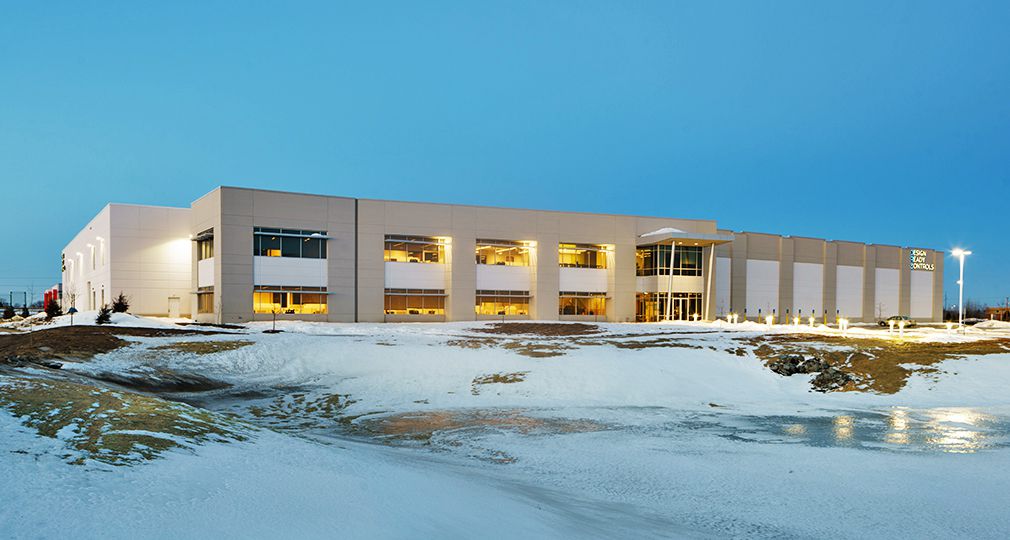
The thermal mass system at Design Ready Controls’ 104,000 sq ft facility went in between a Friday at noon and the following Monday at noon, only 8 to 10 hours on the production schedule. The hydronic alternative was estimated at 4 to 6 weeks, plus about $100,000 in foam insulation before labor. A more recent 30,000 sq ft building was done in a single 8-hour day.
Answer drawn from Premier Energy USA’s blog. Read the original post 1 · original post 2.
More questions.
See all questions-
Costs and Efficiency
How efficient is radiant heat, really?
Efficiency percentages are mostly marketing. Real operating costs are a better test: ThermaRay systems typically cost 30% to 60% less to run than forced air, baseboard, hydronic or infrared heat, with no maintenance or replacement. -
Costs and Efficiency
Why doesn’t thermal mass floor heat need insulation underneath?
Heat only moves toward something colder. The panels warm the slab and ground until it reaches the earth’s temperature, about 2 to 2½ feet down, and then stop. That deep mass stores heat, and the bigger it is, the lower the operating cost. -
Costs and Efficiency
In a cold climate, should I spend more on heating or cooling?
Heating. In colder climates homes heat about ten times more than they cool. A radiant ceiling typically costs half as much to run as gas forced air and a third less than electric forced air, so pair it with simple, well-placed AC.
Have a question of your own?
Call or describe your project, and you'll get a straight answer, with real operating costs from similar buildings.